
Honeywell 13V Pressure Sensor for Ultra-High Purity Applications
The Honeywell latest oil-filled, media-isolated 13V Series stainless-steel pressure sensors is specially designed for UHP applications that involve measurement of gases and liquid flow in harsh environments. The rugged, media-isolated package incorporates a Honeywell proven piezoresistive semiconductor chip in an oil-isolated housing. This design has proven to be highly reliable, stable, and accurate.
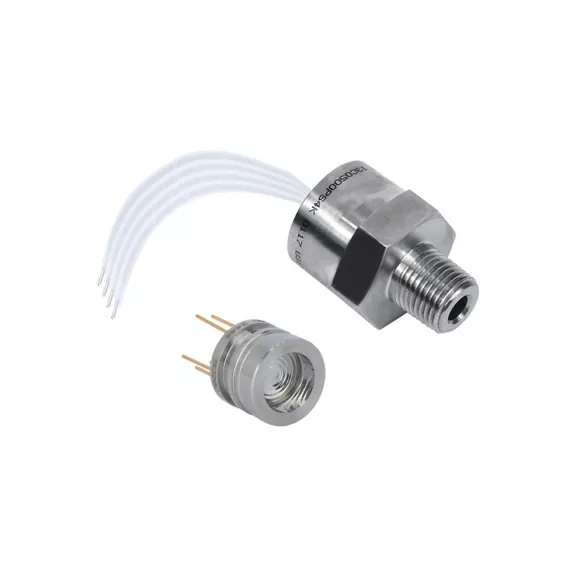
Designed with a SEMI F20-compatible ring and diaphragm, this sensor exhibits exceptional corrosion resistance and can withstand the aggressive nature of the halogenated gases that are commonly encountered in semiconductor manufacturing process. The 13V Series is specially designed to minimize the offset drift under prolonged vacuum conditions making it an ideal choice for critical industrial applications where vacuum condition is common between multiple runs.
Laser welding of the ring and ball ensures reliable sealing and protection against environmental factors while maintaining accurate pressure measurement. These sensors feature high life-cycle capability and are designed for further package integration in OEM (Original Equipment Manufacturer) applications.
Key Specification 1: Low Offset Drift under Extreme Vacuum Conditions
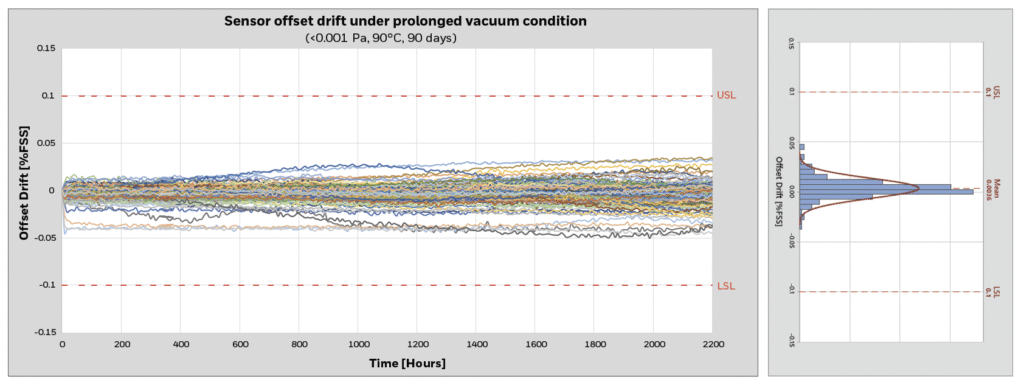
The 13V sensor is specifically designed to operate reliably under extreme vacuum conditions and elevated temperatures making it versatile for etching and vapor deposition application. The graph above shows the excellent offset drift (< ±0.1 % FSR) of SEMI F20 sensors for 90 days at high-temperature vacuum (<0.001 Pascal, 90°C).
Key Specification 2: Low Output Change due to Re-Orientation
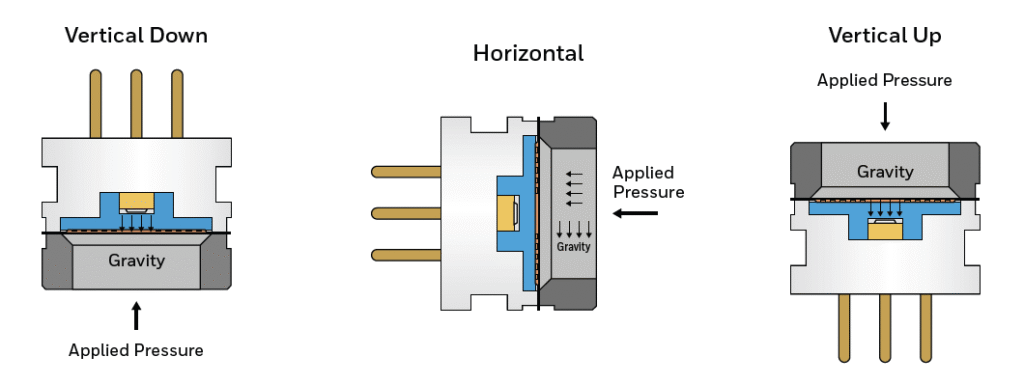
The orientation of an oil-filled pressure sensor can significantly influence its readings due to gravity acting on the internal oil column. The additional pressure exerted by the oil-fill layer can vary due to the impact of gravity. Depending on the sensor orientation, this pressure can be opposing, orthogonal, or aiding the applied pressure. The summation of this error pressure along with the applied pressure gets transmitted from the diaphragm to the piezoresistive element. For a poorly designed pressure sensor, the offset can change significantly going from one orientation to the other.
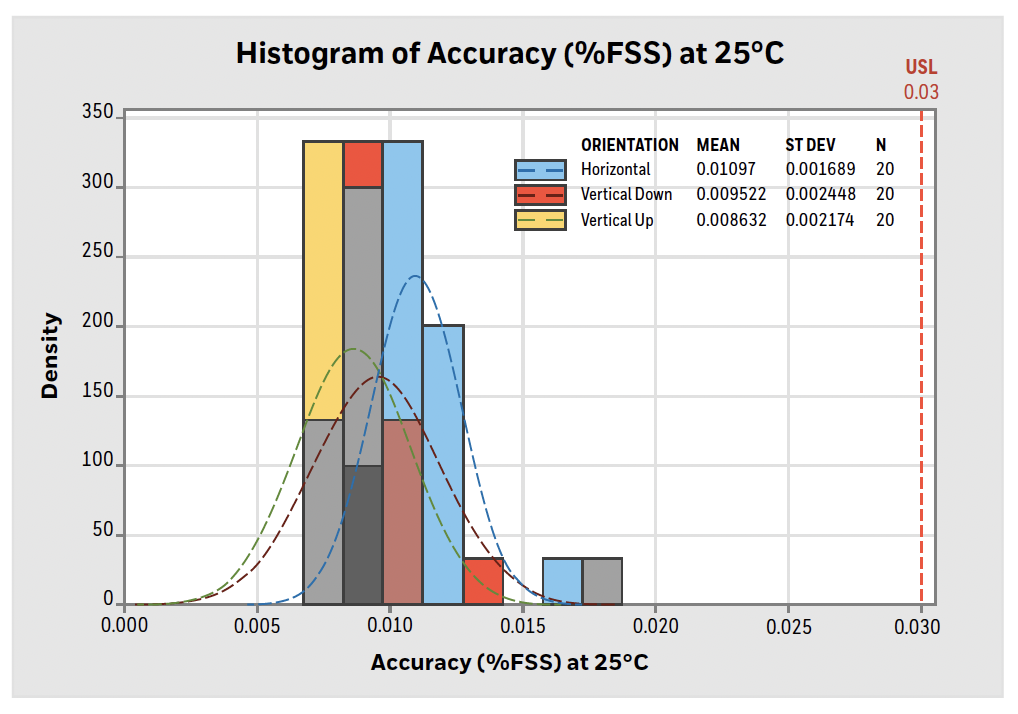
The 13V pressure sensor is designed with optimized oil volume for efficient pressure transfer with minimal impact to the offset, ensuring minimal output variation and consistent performance regardless of orientation. The graph on the previous page shows minimal shift to the sensor output when the product is re-oriented.