
Humanoid Robot Connectors and Cables
Power and feedback to every joint, routed through limbs, surviving the life of the machine. Amphenol interconnect for humanoid platforms, including RoboConn™, a hybrid connector designed for this class of robot.
Why Humanoids Are the Hardest Interconnect Problem
The Ø8.5 mm Problem
A humanoid limb is mostly structure and actuator. What is left for the harness is a narrow bore, so the connector’s outside diameter decides the design long before its current rating does.
Power and Feedback per Joint
Every actuated joint needs drive current and position feedback. Splitting them into two runs doubles what has to pass through the joint; a hybrid connector carries both in one.
Motion Never Stops
The cable flexes every time the robot moves. Flex-cycle life stops being a datasheet footnote and becomes the number that determines service interval.
Assembled Blind
Boards stack inside sealed limb and torso assemblies where no one can see the mating face. Self-aligning, scoop-proof housings make that assembly repeatable instead of hopeful.
A Human-Scale Envelope Changes Every Decision
Humanoid robots replicate human motion and interaction, which puts them into healthcare, service and assistive roles as well as industrial ones. The engineering consequence is that the machine has to fit a human envelope while carrying dozens of actuated joints, a perception stack and its own power.
That constraint cascades. Mass in a limb is mass the actuator has to accelerate, so harness weight is a performance figure, not an afterthought. Space between structural members sets connector diameter. Continuous articulation sets flex life. And because switching motors sit centimetres from camera and LiDAR runs, shielding decides whether the perception data arrives clean.
Amphenol’s response is miniature, lightweight, high-speed connectors built for compact dynamic architectures — and, in RoboConn™, a part specified for humanoid platforms rather than adapted to them.
Featured Products — Joint and Board Interconnect
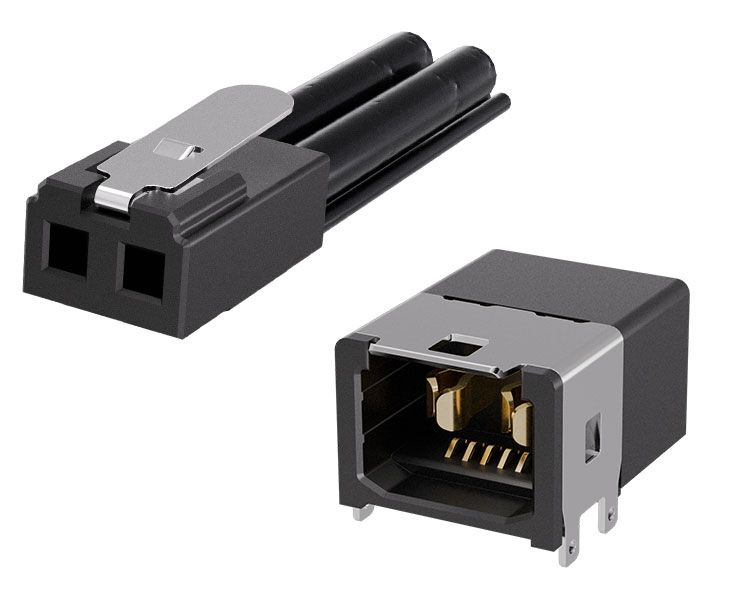
RoboConn™ Wire-to-Board Connectors and Cables
Hybrid power and signal, designed for humanoid robots
A hybrid wire-to-board connector and cable system combining power delivery and high-speed data in one compact, rugged run. Two 20 A power contacts sit alongside up to five configurable signal pins, supporting 60 V DC power and 100BASE-TX Ethernet — in a profile slim enough to pass through an 8.5 mm bore.
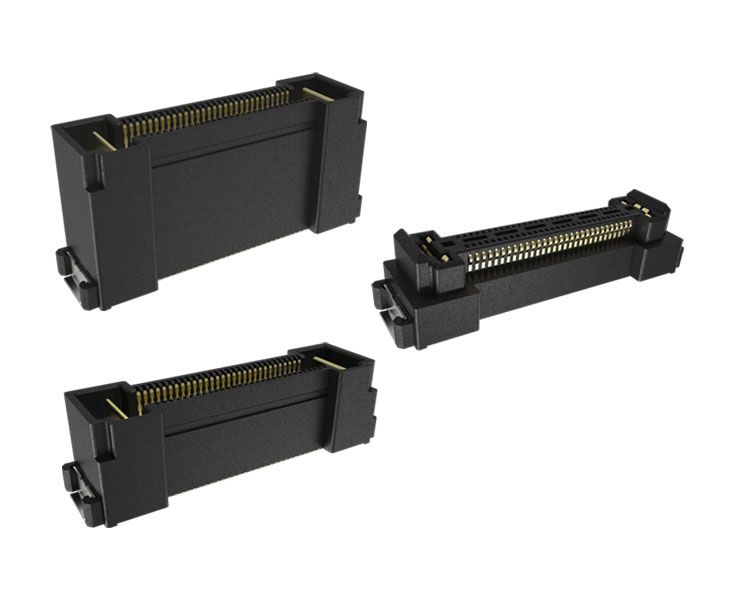
ComboStak® 0.50mm & PowerStak® 2.00mm
Hybrid board-to-board for stacked control and power boards
Compact hybrid board-to-board connectors that put 2.00 mm power blades and 0.50 mm high-speed signal pins in a single housing, so a control board and its power stage mate in one action. Self-alignment and a scoop-proof housing support blind mating inside a closed assembly.
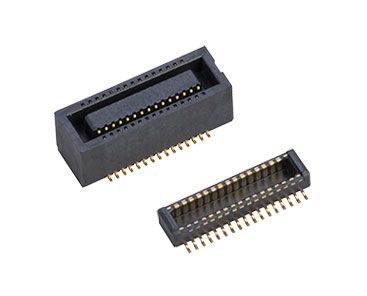
BergStak® 0.40mm Self-Alignment
Fine-pitch board-to-board built for blind mating
A 0.40 mm fine-pitch board-to-board connector with a self-alignment feature that supports blind mating, for the stacked control and sensor boards buried inside a limb or torso assembly. USCAR-2 compliant, so its vibration and shock limits are qualified against automotive practice.
Featured Products — Sensing, Peripherals and Contacts
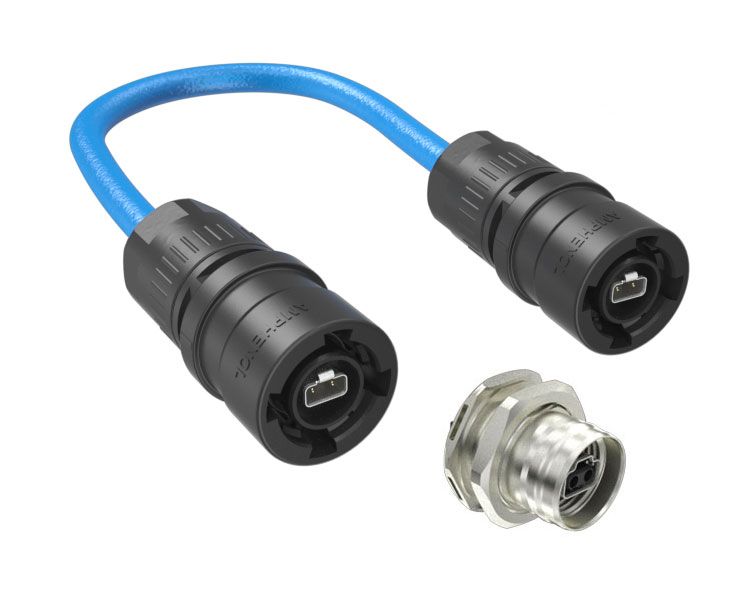
Single Pair Ethernet (SPE) IP67
Sealed circular push-pull for sensors and actuators
IEC 63171-6 compliant sealed Ethernet in an M12-size circular push-pull form factor, bringing direct Ethernet to sensors, actuators and vision cameras. A single pair carries both data and power, cutting cable count, weight and space against two- and four-pair alternatives.
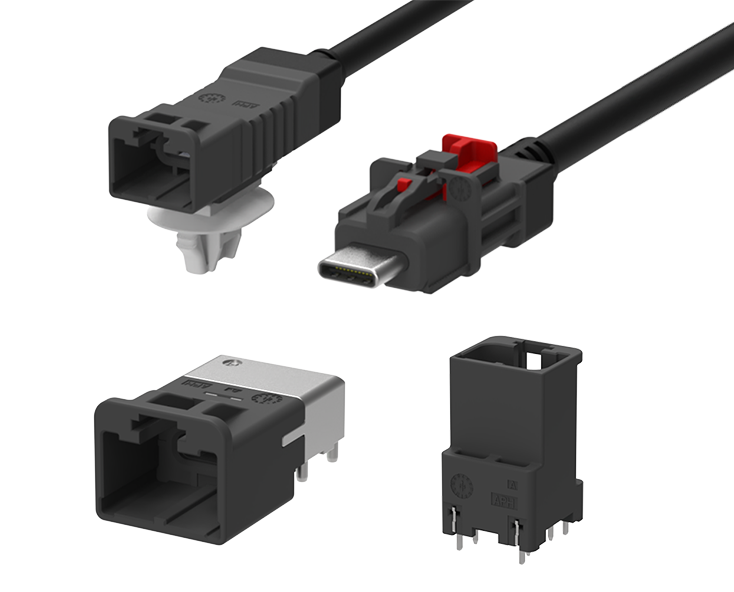
Mini HSBridge+
Vibration-qualified USB Type-C for high-speed peripherals
An automotive-grade USB Type-C interface in a 24 × 14.3 × 12.2 mm body. Amphenol lists it in the humanoid section for a specific reason: it is a standard 10 Gb/s USB interface that has been qualified to automotive vibration practice, which is the credential a moving robot needs from a consumer interface.
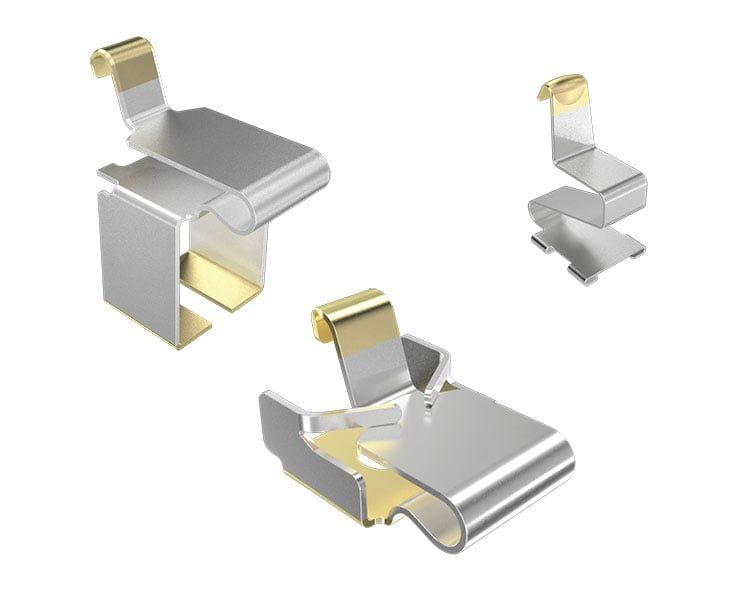
Spring Contacts
Docking, charging and grounding contact interfaces
Spring fingers and spring-loaded contacts for signal, power and grounding where two surfaces meet rather than two connectors — charge docks, battery interfaces and chassis grounding. Formed in one stamping step, in a range of heights that suits low-profile assemblies.
Choosing a Hybrid Interconnect
|
Feature |
RoboConn™ |
ComboStak® / PowerStak® |
BergStak® 0.40mm SA |
|---|---|---|---|
|
Interface |
Wire-to-board and cable |
Board-to-board |
Board-to-board |
|
Carries |
Power and signal |
Power and signal |
Signal only |
|
Current per contact |
20 A per power pin |
25 A per power blade |
Signal level |
|
Data rate |
100 Mb/s (100BASE-TX) |
16 Gb/s PCIe® Gen 4, 20 Gb/s USB-C |
8 Gb/s, PCIe® Gen 3 |
|
Blind mating |
Latch locking, no tools |
±0.4 mm, scoop-proof |
Self-alignment feature |
|
Vibration qualification |
V2 rated |
USCAR-2 V2 |
USCAR-2 limits |
|
Best suited to |
Runs through a joint to an actuator |
Stacked control and power boards |
Dense signal stacks in a sealed assembly |
Frequently Asked Questions
Building a Humanoid Platform?
Tell us the bore your harness has to pass through, the current each joint draws and the flex life you need. We will work back to a part, samples and full datasheets.